Source Eco Friendly Recycled Felt Pen Bag for Schools Offices Gifts
Compare 30 listings of eco friendly recycled felt pen bags from China suppliers. Buyers can review options for schools, offices, and gift uses with varying colors, sizes, and customization features.
Key considerations
Products List
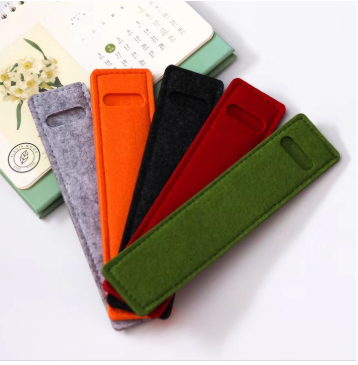
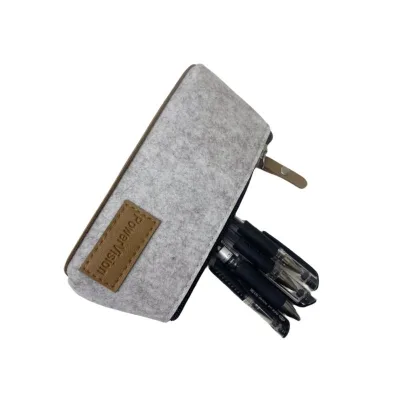
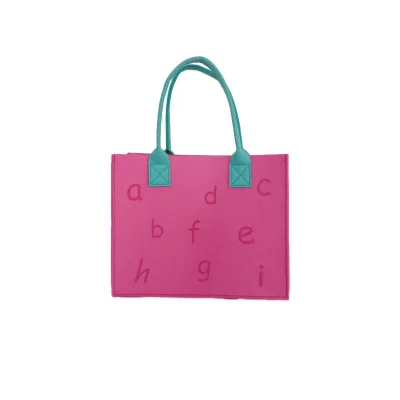
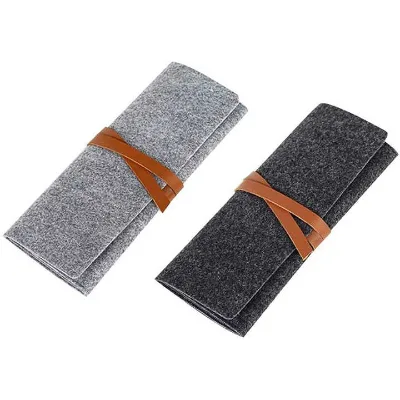


Comprehensive Sourcing Guide
Strategic Sourcing Guide for Eco-Friendly Recycled Felt Pen Bags
Understanding Material Composition and Technical Specifications
When sourcing eco-friendly recycled felt pen bags, the primary focus must be on verifying the material composition and technical attributes that define the product's utility and environmental profile. Based on available market data, the core material for these items is consistently identified as felt, with specific listings noting "polyester felt" as a common variant. This distinction is critical for buyers, as the term "felt" can encompass wool, synthetic blends, or recycled fibers. The observed product attributes indicate a "soft" hardness level, which is essential for protecting delicate stationery items like pens, pencils, and small electronics without causing abrasion.
The technical specifications for these bags often include customizable dimensions. While some standard listings reference specific dimensions such as 6227cm or a standard of 370260mm, the prevailing trend in this category is "Custom Size Accepted." This flexibility allows procurement teams to tailor the internal volume to specific inventory needs, whether for a standard set of writing instruments or larger tech accessories. The closure mechanisms observed in high-confidence data include "Hasp" styles, ensuring secure storage during transit or daily use. Furthermore, the product type is frequently categorized under "Pencil Bag," "Felt Storage Bag," or "Stationery," with some listings noting an application for "Protect Laptop, Phone," suggesting a versatile design that can scale beyond simple pen storage.
Buyers should verify the exact fiber content to ensure the "eco-friendly" claim aligns with their sustainability goals. While the provided data confirms the use of felt and polyester felt, it does not explicitly quantify the percentage of recycled content. Therefore, the technical specification sheet must be scrutinized to confirm whether the material is virgin polyester, recycled polyester (rPET), or a wool blend. The "Feature" attribute explicitly lists "Eco-Friendly," but this is an observation of the product listing rather than a certified guarantee. Consequently, the buyer's technical review must demand third-party verification of the recycled content percentage to validate the environmental claim.
Compliance, Certification, and Environmental Verification
In the realm of sustainable procurement, the distinction between a marketing claim and a verified certification is paramount. The current market data for felt pen bags includes references to "OEKO-TEX" and "FSC" in background contexts, yet these are flagged as low-confidence and should not be assumed as standard attributes for every listed product. The presence of these terms in general background knowledge does not constitute a fact that every supplier in the category possesses. Instead, buyers must treat these as verification targets rather than inherent features.
To ensure compliance, procurement teams must explicitly request certification documents for any product marketed as eco-friendly. The "OEKO-TEX Standard 100" is a widely recognized benchmark for testing textiles for harmful substances, ensuring the felt is free from toxic dyes and chemicals. Similarly, "FSC" (Forest Stewardship Council) certification is relevant if the felt contains wood pulp or cellulose fibers, verifying that the raw materials are sourced from responsibly managed forests. However, since the supplied facts do not confirm that all 30 observed products hold these certifications, the buyer's due diligence process must include a mandatory request for valid, current certificates from the supplier.
The "Eco-Friendly" feature listed in the product attributes serves as a starting point for inquiry but not as a final validation. Buyers should verify if the "recycled" aspect refers to post-consumer waste or post-industrial scrap. Additionally, the "Customization" availability noted in the data suggests that the printing process, such as "Digital Printing" or "Thermal Transfer," must also be eco-compliant. Buyers should inquire about the inks used in these processes to ensure they are water-based or free from heavy metals, aligning the entire product lifecycle with sustainability goals. Without explicit documentation, the "Eco-Friendly" label remains an unverified observation.
Cost Drivers and Pricing Structure Analysis
The financial landscape for sourcing eco-friendly felt pen bags is influenced by several variable factors, including material composition, customization levels, and order volume. The observed price range in the market data spans from $0.01 to $2.50 USD. This wide variance indicates that the final unit cost is highly sensitive to the specific configuration of the order. The lower end of the price spectrum likely corresponds to basic, non-customized units with standard dimensions and minimal branding. Conversely, the upper end of the range reflects products with complex customization, premium recycled materials, or specialized printing techniques like thermal transfer.
Minimum Order Quantity (MOQ) is a significant cost driver in this category. The data reveals an MOQ range of 50 to 5000 units, with specific high-confidence listings citing MOQs of 100 pcs or 200 pcs. For buyers with smaller volume requirements, the unit cost may be higher due to the fixed setup costs for digital printing and pattern cutting. Conversely, larger orders can leverage economies of scale to reduce the per-unit price. The "Selling Units" are listed as "Single item," which implies that pricing is calculated on a per-piece basis, but the total cost is heavily dependent on meeting the supplier's MOQ threshold.
Additional cost factors include the "Packing" requirements. The data notes that products are typically packed in "OPP Bag + Carton" or "as Your Request." Custom packaging solutions, such as branded boxes or specific eco-friendly packaging materials, will add to the overall cost. Furthermore, the "Sample" availability is noted as "free" in several listings, but buyers must be aware that while the sample itself may be free, shipping costs for samples are often borne by the buyer. These logistical costs should be factored into the total procurement budget. The "Weight Limit" of 5-10 kg and "Gross Weight" of 0.1-0.2 kg per unit also influence shipping costs, particularly for air freight versus sea freight options.
Typical Applications and Usage Scenarios
The versatility of felt pen bags makes them suitable for a diverse range of applications, extending beyond simple stationery storage. The primary use cases identified in the data include "Gift," "Schools & Offices," "Shopping," "Promotion," and "Packing." The "Gift" application is particularly strong, as the "Fashionable" and "Classic style" attributes make these bags attractive as promotional giveaways or corporate gifts. The ability to accept "Customized Logo" and "Customized Color" (including Green, Pink, Grey, and Black) allows companies to align the product with their brand identity effectively.
In the educational sector, the "Schools & Offices" use case is prominent. The "Soft" hardness and protective nature of the felt material make these bags ideal for students and professionals carrying writing instruments, calculators, or small tech accessories. The specific mention of "Protect Laptop, Phone" in the application attributes suggests that larger variants of these bags can serve as protective sleeves for electronics, expanding their utility beyond traditional stationery. The "Leisure" style attribute further broadens the potential market to include personal use cases, such as travel organizers or hobby storage.
The "Promotion" and "Shopping" applications highlight the bag's role as a marketing tool. With "Digital Printing" and "Thermal Transfer" capabilities, companies can produce high-quality, branded bags for trade shows, conferences, or retail promotions. The "Folded" type mentioned in the attributes suggests that some designs may be collapsible, enhancing their portability and making them convenient for promotional distribution. Buyers should consider these diverse applications when selecting the specific model number, size, and closure type to ensure the product meets the intended use case.
Supplier Evaluation and Production Capabilities
Evaluating suppliers for eco-friendly felt pen bags requires a rigorous assessment of their production capabilities, location, and responsiveness. The data indicates that the "Place of Origin" for these products is predominantly "China HeBei" or "Hebei, China." This region is known for its textile manufacturing infrastructure, but buyers must verify the specific factory's capacity to handle eco-friendly materials and custom orders. The "Brand Name" varies, with listings showing "HZ" and "Huizhong," indicating a mix of established brands and private label manufacturers.
Key evaluation criteria should include the supplier's ability to provide "Customized Logo" and "Customized Size" options. The data confirms that "Logo" and "Size" customization are available, but the extent of these capabilities varies. Buyers should request samples to test the quality of the printing process, specifically "Digital Printing" and "Thermal Transfer," to ensure the branding is durable and vibrant. The "Model Number" variations, such as "Felt Storage Bag," "Stationery," or specific codes like "walutz-837," suggest a wide range of SKUs. Buyers should verify if the supplier can consistently produce the specific model required without compromising quality.
The "Sample" policy is another critical factor in supplier evaluation. While the data notes that samples are "free," the logistics of obtaining them should be clarified. A reliable supplier should be able to provide a sample quickly to validate the material quality, color accuracy, and construction. Additionally, the "Customization" availability should be confirmed in writing, including lead times for custom orders. Buyers should also assess the supplier's communication responsiveness and their willingness to provide detailed technical specifications and compliance documentation.
Quality Control and Long-Term Procurement Considerations
Maintaining consistent quality in felt pen bag procurement requires a robust quality control (QC) strategy. The "Hardness" is listed as "Soft," which is a desirable trait for protection, but buyers must verify that the felt does not shed fibers or degrade over time. The "Closure Type" of "Hasp" should be tested for durability to ensure it remains secure during repeated use. Since the "Feature" includes "Eco-Friendly," the QC process must also include checks for the integrity of the recycled materials, ensuring they meet the specified environmental standards.
Long-term procurement considerations involve building a sustainable supply chain. Buyers should prioritize suppliers who demonstrate transparency in their material sourcing and production processes. The "Packing" method, typically "OPP Bag + Carton," should be evaluated for its environmental impact. Opting for recyclable or biodegradable packaging can further enhance the eco-friendly profile of the final product. Additionally, the "Weight Limit" and "Gross Weight" data should be used to optimize logistics and reduce the carbon footprint of shipping.
To ensure long-term success, buyers should establish clear communication channels with suppliers regarding quality expectations and compliance requirements. Regular audits or third-party inspections may be necessary to verify that the "Eco-Friendly" claims are upheld over time. The "MOQ" flexibility, ranging from 50 to 5000 units, allows for scalable ordering strategies, enabling buyers to adjust order volumes based on demand fluctuations without incurring excessive costs. By focusing on these quality and sustainability factors, buyers can secure a reliable supply of high-quality, eco-friendly felt pen bags that meet their specific business needs.
Summary of Key Sourcing Parameters
The following table summarizes the critical parameters observed in the market data for eco-friendly recycled felt pen bags, providing a quick reference for procurement teams.
| Parameter | Observed Range/Value | Verification Requirement |
|---|---|---|
| Material | Felt, Polyester Felt | Confirm recycled content percentage |
| Origin | China, HeBei | Verify factory location and capacity |
| MOQ | 50 - 5000 pcs | Confirm specific MOQ for custom orders |
| Price Range | $0.01 - $2.50 USD | Request quote based on volume and specs |
| Customization | Logo, Size, Color | Confirm printing method and lead time |
| Closure | Hasp | Test durability and security |
| Certifications | OEKO-TEX, FSC (Background) | Request valid certificates for each batch |
| Sample | Free (Shipping may apply) | Verify sample lead time and quality |
| Packing | OPP Bag + Carton | Confirm eco-friendly packaging options |
| Style | Fashionable, Classic, Leisure | Ensure alignment with brand identity |
By adhering to these guidelines and verifying the specific details provided by suppliers, buyers can effectively navigate the market for eco-friendly recycled felt pen bags, ensuring they secure products that meet both functional and sustainability requirements.
FAQs
What material is used for eco friendly recycled felt pen bags?
The primary material is felt, often specified as polyester felt in listings. Buyers must verify the exact fiber content to confirm if it is virgin or recycled polyester, as the eco-friendly claim requires third-party verification of the recycled percentage.
Can I customize the size and logo on these felt bags?
Yes, customization is available for both size and logo. Listings confirm that custom sizes are accepted and logos can be added via digital or thermal transfer printing, allowing buyers to tailor the product to specific branding needs.
What is the minimum order quantity for these products?
The minimum order quantity typically ranges from 100 to 200 pieces based on observed listings. Some suppliers may require up to 5000 units, so buyers should confirm the specific MOQ threshold before placing an order to ensure cost efficiency.
How much do eco friendly recycled felt pen bags cost?
The observed price range spans from 0.01 to 2.5 USD per unit. The final cost depends heavily on customization levels, material quality, and order volume, with basic non-customized units generally falling at the lower end of this spectrum.
Where are these felt pen bags manufactured?
The products are predominantly manufactured in Hebei, China. Buyers should verify the specific factory location and capacity, as this region is known for textile manufacturing but requires due diligence on production capabilities for eco-friendly materials.
What certifications are available for these eco-friendly bags?
While OEKO-TEX and FSC are mentioned in background contexts, they are not confirmed as standard attributes for all products. Buyers must explicitly request valid, current certification documents to verify that the materials are free from harmful substances and responsibly sourced.
Can these bags be used to protect laptops and phones?
Yes, some listings indicate the application includes protecting laptops and phones. The soft hardness of the felt material provides protection for delicate electronics, though buyers should check specific dimensions and closure types to ensure adequate fit and security.